“The Engineer Who Turned Down Offers from 20 Companies Becomes the Future of Korean Robotics”
: Choosing Revolution Over Stability — The Bold Gamble of Roboticist Yoonseok Pyo, Vice President of ROBOTIS (Department of Electronic Engineering, Class of ’02)
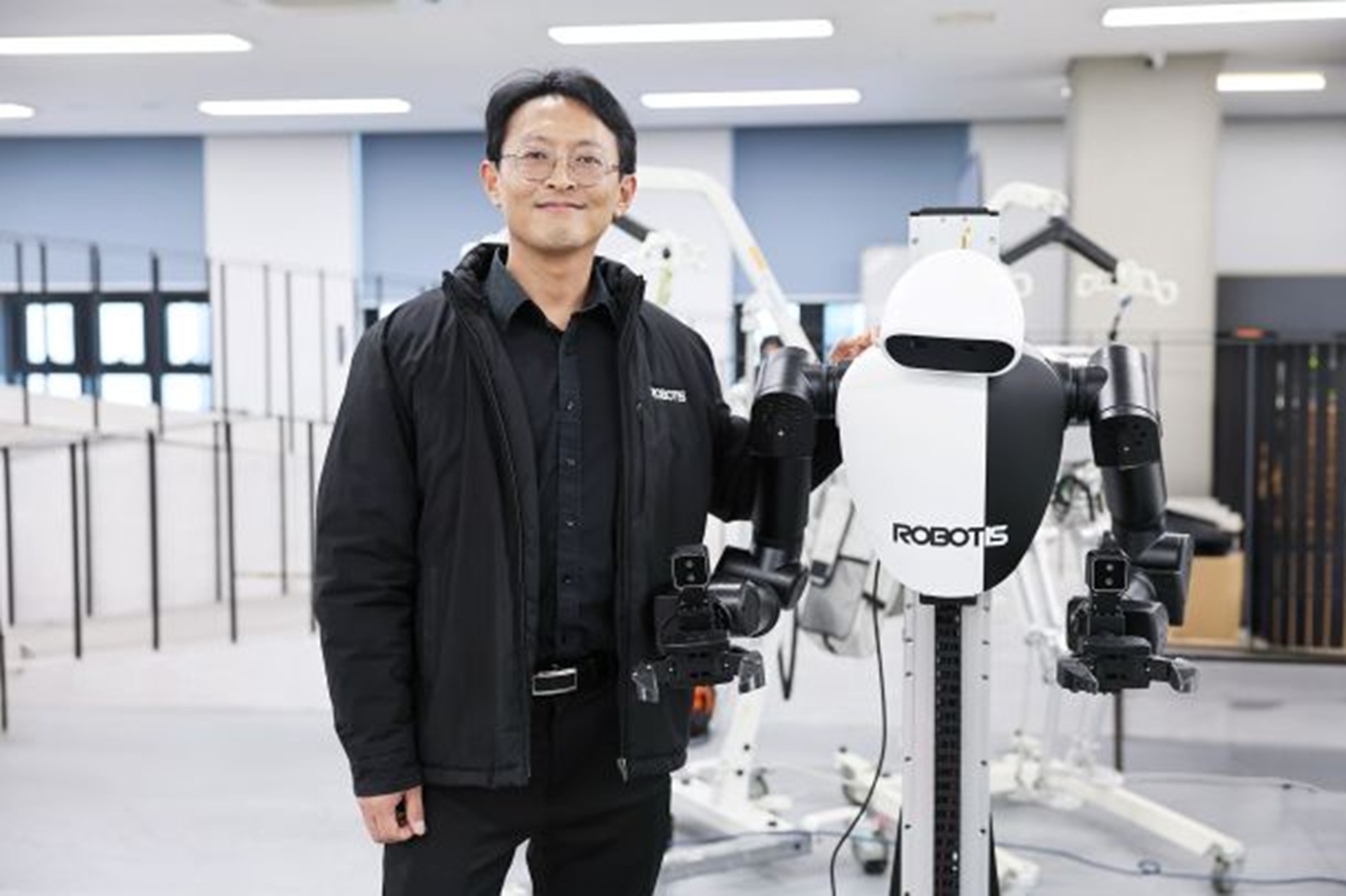
Yoonseok Pyo, Vice President of ROBOTIS, Standing with a Robot Currently Under Development
February 9th, 2026. “Code that worked perfectly on a desk collapses on the competition floor. Real engineering begins right there.” Even before completing his Ph.D., he received extraordinary offers from around 20 major corporations, including Samsung and LG. While many described a leadership role at a large conglomerate as a guaranteed path to success, he turned them all down. Instead, he chose to put on oil-stained work clothes and head to a small venture company in Geumcheon-gu called ROBOTIS.
Ten years later, the company he chose has grown into a publicly listed firm with a market capitalization in the trillions of won, becoming the “heart” of Korea’s robotics industry. From being a founding member of Kwangwoon University’s RO:BIT—the nation’s first university student robot game team—he has become an architect shaping the “laws” and “standards” that allow robots to walk alongside us. The journey of Yoonseok Pyo, Vice President of ROBOTIS, has itself become part of the history of Korean robotics.
A Future Forged by Oil-Stained Hands, Hotter Than Any Laboratory Desk
“Robotics begins with the mind and ends with the hands. Sharpen your intellectual rigor, but always make sure your hands carry the marks of grease and solder.” This is the advice Vice President Pyo offers to aspiring robotics engineers. His words carry the weight of more than two decades spent in the field. While majoring in electronic engineering and control engineering, he became captivated by logic circuits, code, and the dynamic actuation that brings real hardware to life. Over time, he developed a firm conviction: robots are not merely machines, but tools for solving society’s problems. That conviction crystallized the moment he witnessed a robot he had built complete its mission autonomously—without human assistance—and deliver tangible value to others.
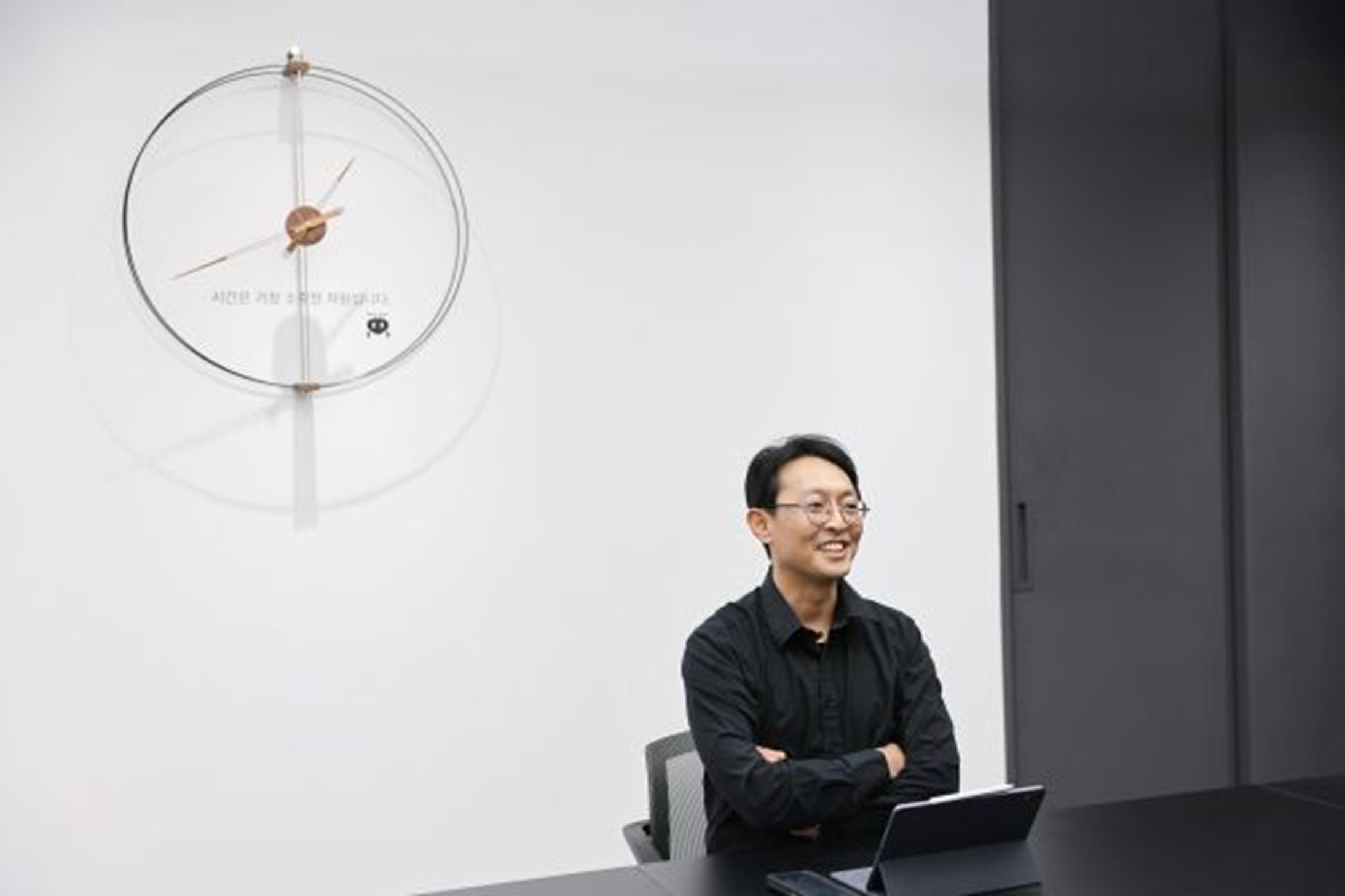
Vice President Yoonseok Pyo Smiling as He Describes His Day, Which Begins Early in the Morning
Field-Centered Engineering Born from the Robot Game Team RO:BIT
In 2006, during his time at Kwangwoon University, he founded the robot game team RO:BIT—an experience that became the root of his engineering career. At the time, robots were often confined to laboratory results, but he wanted them to interact with the public and be tested in the dynamic arena of “robot sports.” “Watching code that worked perfectly on a desk fail because of tiny uneven surfaces on the arena floor or changes in lighting led me to adopt a ‘field-centered engineering’ mindset.” His time with RO:BIT taught him not only technical resilience but also the importance of teamwork. He recalls it as “the moment I realized I couldn’t do everything alone, and truly understood the value of open source and community.” Those formative experiences later fueled his continued involvement in robotics communities such as OROCA and Royamoe.
Finding the Subtle Intersection Between Japan’s Relentless Craftsmanship and Korea’s Speed
After gaining hands-on experience at KIST, he left to study in Japan, a global powerhouse in robotics. In the early 2010s, when people thought of robots, they thought of ASIMO and Sony’s humanoids. “Japan’s research culture was marked by an almost obsessive craftsmanship and deep persistence in foundational technologies. Korea, on the other hand, is flexible in adapting to change and excels in rapid execution and commercialization. I learned how to harmonize these two strengths.” The six years he spent completing his master’s and doctoral studies at Kyushu University were far from easy. To support himself financially, he worked three part-time jobs simultaneously—from washing dishes to participating in clinical trials. Eventually, receiving a Japanese Ministry of Education (MEXT) scholarship allowed him to fully devote himself to research, a period he describes as transformative.
“A 20-to-1 Choice: Abandoning Stability to Step onto Robotics’ Growth Curve”
In the final year of his doctoral program, a decisive moment arrived. Kim Byungsoo, CEO of ROBOTIS—where Pyo had once worked as an intern after completing his military service—reached out to him. At the time, the DARPA Robotics Challenge was underway in the United States. The CEO invited him to the U.S., where they stayed in the same accommodation for several days while attending the competition together. During that time, recruitment unfolded naturally. Many around him were skeptical. Some even questioned, “After earning a Ph.D., you’re going to a small or mid-sized company?” At that time, he had received scouting offers from more than 20 companies, including Samsung and LG. “ROBOTIS was certain about one thing—they would focus solely on robotics. Large corporations invest in robotics when it seems promising and pull back when it doesn’t. ROBOTIS has been committed to robotics for 27 years.”
Above all, what captured his heart was ROBOTIS’s philosophy of open source. “Robotics involves multiple disciplines and highly complex challenges, so developers around the world must collaborate and advance the field through open source.” For someone who already held that belief, ROBOTIS was the perfect place to turn that vision into reality.
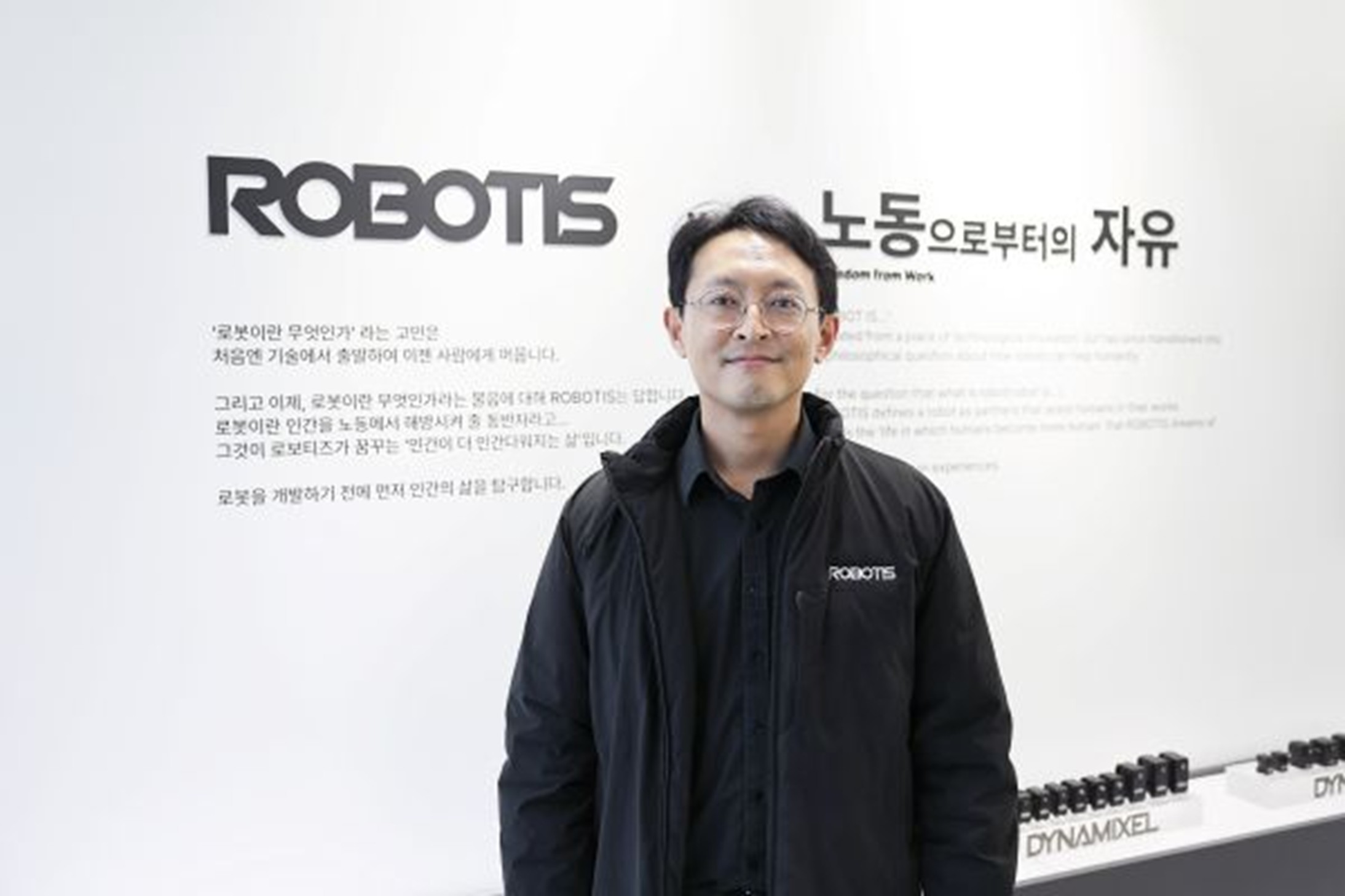
Vice President Yoonseok Pyo Says Robots Are Friendly Neighbors Meant to Be With Us
Beyond Technology, Changing the Law: Securing the Right of Robots to Walk
After joining ROBOTIS, he focused on developing outdoor autonomous robots. Indoor environments are controlled and predictable. Outdoors, everything is different—weather shifts, terrain varies, pedestrians move unpredictably. Variables multiply without mercy. “Technically, we had to overcome glare and sensor noise on rainy days. In reality, the bigger challenge was creating service scenarios that would help people see robots not as something to be wary of, but as convenient neighbors.” The moment his outdoor autonomous robot, GAEMI, began operating in the heart of Gangnam Station was not merely a technological triumph.
At the time, robots were not legally allowed to travel on sidewalks. It was, quite simply, illegal. Instead of stepping back, he stepped forward. He persuaded government officials, presented data, and demonstrated safety through evidence rather than optimism. Engineering, in this case, extended beyond circuits and code into policy and public trust. His persistence ultimately led to a historic outcome: the revision of the Intelligent Robots Act.
With that legal amendment, robots in Korea gained the lawful right to navigate public streets. An engineer did not just build a machine—he helped build the legal foundation that allows machines to coexist with us in shared space.There’s something quietly radical about that. We tend to imagine innovation as faster processors or sleeker hardware. But sometimes the real breakthrough is institutional—rewriting the rules so reality can catch up with possibility. In that sense, the evolution of robotics isn’t just mechanical. It’s social. And social change, unlike code, rarely compiles on the first try.
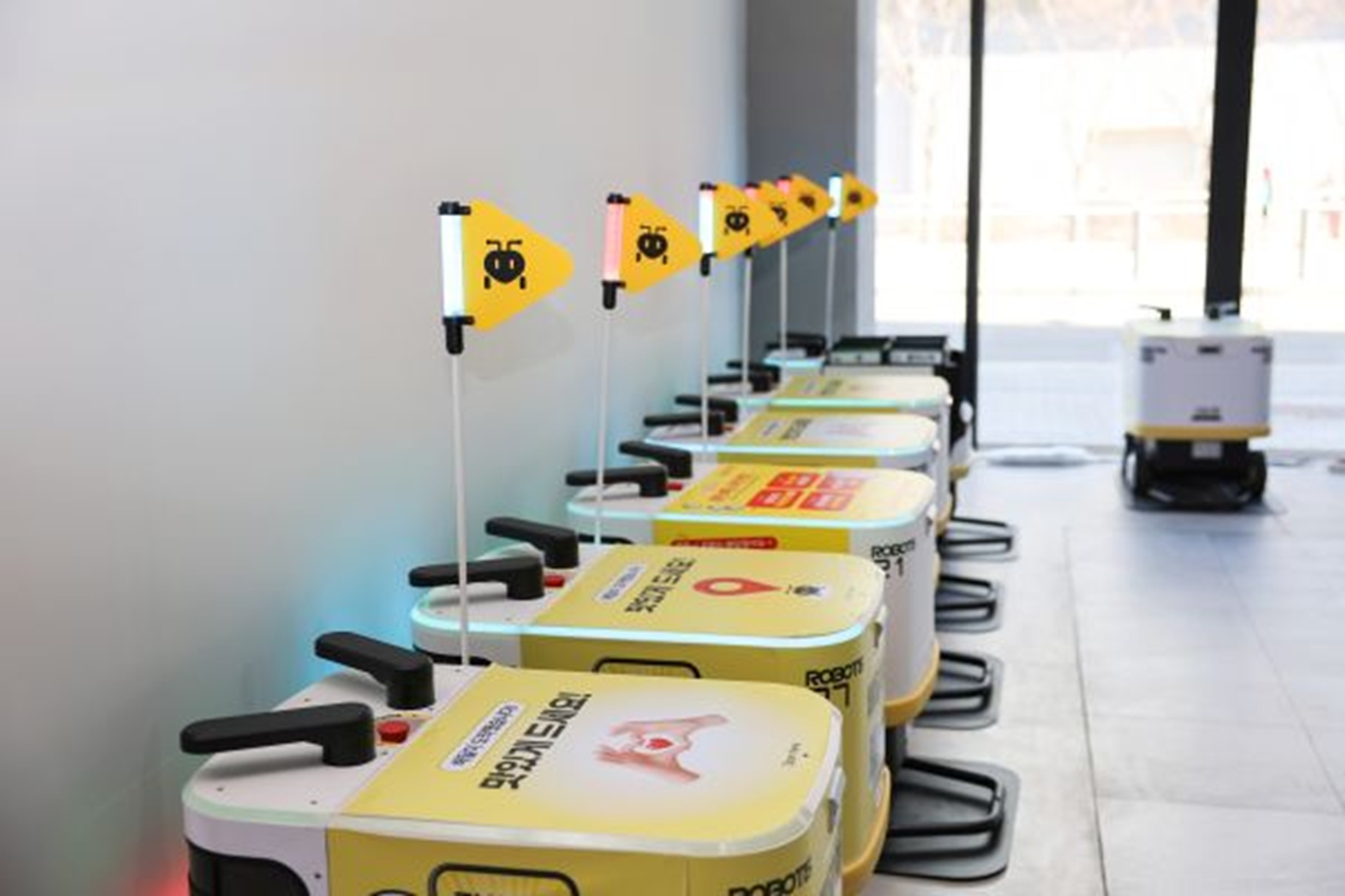
The ‘GAEMI’ Robot Developed with the Participation of Vice President Yoonseok Pyo
The outdoor autonomous robot GAEMI, in whose development Vice President Pyo participated, is currently operating more than 150 units in real-world settings. It delivers goods while traveling between six to seven subway stations near Gangnam Station and also provides delivery services on university campuses such as Inha University and Hanyang University. Vice President Pyo shared that he feels the greatest sense of fulfillment when he sees the robot quietly completing its mission even in harsh weather—and especially when children spot it, smile brightly, and wave at it.
The Kwangwoon Identity: “Wild Pragmatism” That Carves New Paths
“If you unfold the map of Korea’s robotics industry, you’ll find Kwangwoon alumni positioned at many of its most critical points.” Vice President Pyo defines his pride as a Kwangwoon alumnus as “wild pragmatism”—a refusal to remain confined to theory, combined with the persistence and execution needed to make robots move in the real world, no matter what. He emphasizes the importance of strengthening interdisciplinary, project-based education at the university and encourages juniors to build things themselves and accumulate real experiences—even failures.
A Name Proven by Calluses: The ‘Real Engineer’
Some may have called his decision to turn down 20 corporate offers a reckless gamble. Ten years later, he has proven otherwise. He has shown how a life spent rolling alongside robots on cold asphalt can create far greater change than one spent seated comfortably in an office chair.
What he changed was not only a clause in the law. He transformed robots from “objects of caution” into “friendly neighbors,” and in doing so, removed many of the stones labeled “impossible” from the path his juniors will walk.
As the interview concluded, his final words remained as passionate as ever:
“Do not fear failure. The calluses you build in the field, working alongside robots, will ultimately make you irreplaceable.”
In the quiet figure of the GAEMI robot moving steadily through the forest of buildings around Gangnam Station, there lingers the sincerity of an engineer who has shaped the future with oil-stained hands. Until the day robots become an ordinary part of daily life, the wheels of this “wild pragmatist,” Yoonseok Pyo, will not stop turning.
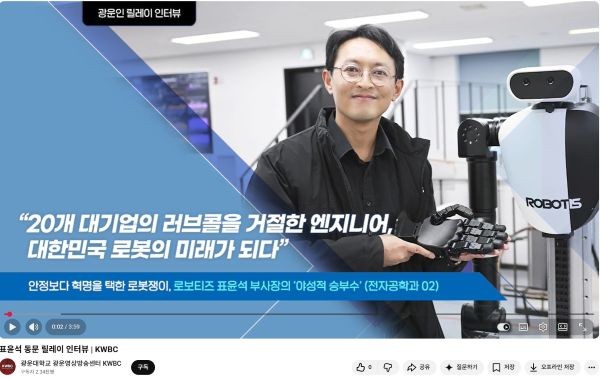
★ Watch the interview video with alumnus Yoonseok Pyo (Click the link to be redirected to YouTube)




