“Leaping Directly into the World” Student-Led Overseas Exploration Program ‘2025 Kwangwoon Global Challenger’ Successfully Concludes
– Final Results Presentation Held at Kwangwoon University’s Pangyo Campus –
– Studies Conducted in Countries Including Japan, Germany, the UK, and the Netherlands –
February 2nd, 2026. Kwangwoon University (President Yoon Do-young) held the final results presentation for the 2025 Kwangwoon Global Challenger program on Friday, January 23, at the university’s Pangyo Campus (Pangyo Global Business Center).
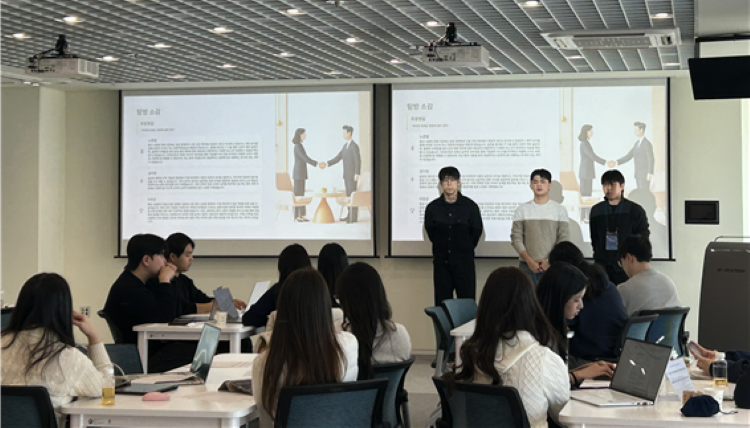
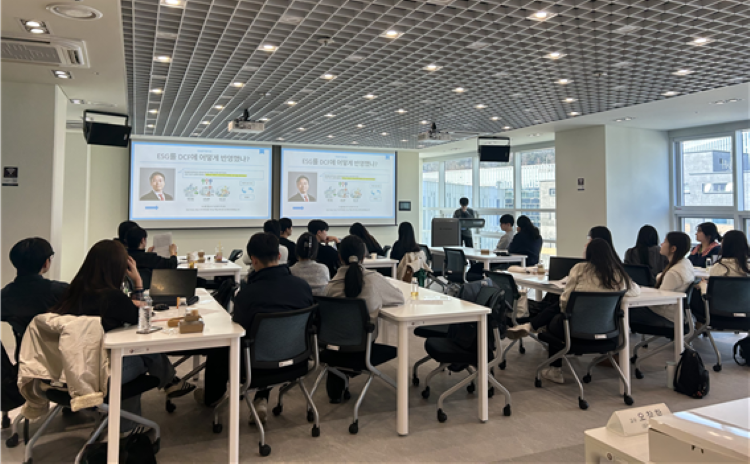
The 2025 Kwangwoon Global Challenger is a student-led overseas exploration program designed to cultivate global competence and a spirit of challenge among enrolled students. Participants form teams and independently travel abroad to conduct exploratory research on topics spanning majors, society, technology, and culture.
Unlike conventional overseas training or short-term visits, the program emphasizes full student ownership of the entire process—from pre-trip planning and on-site field research to final reporting and presentations.
At the final presentation, seven teams shared the outcomes of their overseas field studies, presenting both their exploration achievements and research findings. The teams visited a range of countries, including Japan, Germany, China, the United Kingdom, and the Netherlands, and addressed a broad spectrum of global issues.
Presentation topics included collaborative welfare administration models, EU environmental regulations and sustainable trade strategies, entry strategies for the Chinese market, eco-friendly film production systems, ESG value evaluation, renewable energy and smart grid systems, and circular economy models.
Following evaluation, the teams Hongyujanghwang(홍유장황), Kudeolmudeol(쿠덜무덜), and NextFab Japan were selected as outstanding teams.
The Hongyujanghwang(홍유장황) team analyzed a circular economy model centered on Germany’s Pfand deposit system, with a focus on AI- and IoT-based unmanned collection machines. Through surveys of Cologne residents and interviews with students at the Technical University of Berlin, the team conducted an in-depth investigation into public perceptions of unmanned collection systems and the institutional characteristics of the Pfand scheme.
Based on these findings, they proposed improvement measures for a Korean-style resource circulation system, earning high praise. Notably, the team continued its research after returning to Korea by analyzing domestic unmanned collection systems and reward structures, further detailing feasibility and potential policy impacts.
The Kudeolmudeol(쿠덜무덜) team explored sustainable energy systems through case studies of eco-friendly energy and smart grid initiatives in the Netherlands. By comparing and analyzing renewable energy utilization and energy management structures, the team proposed strategies for developing a Korea-specific sustainable energy system.
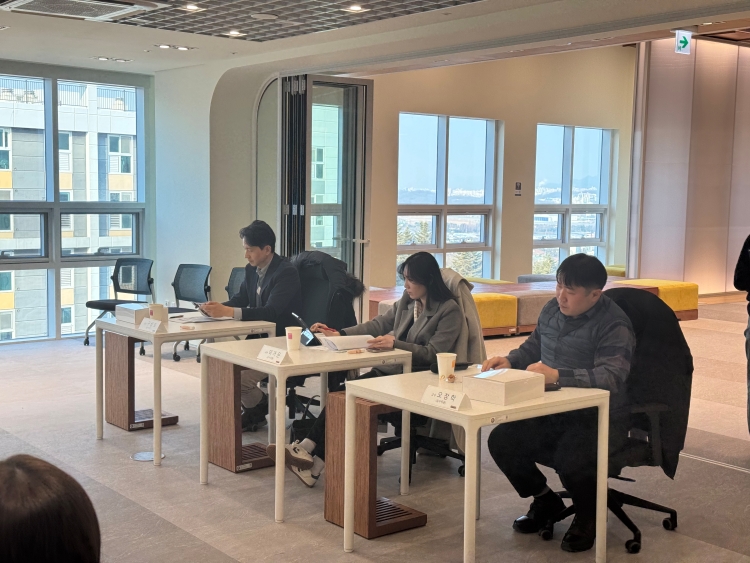
Members of the evaluation panel review and assess student presentations during the final results presentation of the “2025 Kwangwoon Global Challenger.”
The NextFab Japan team was recognized for enhancing its understanding of the global business environment through data analysis of DCF (Discounted Cash Flow) and ESG management value evaluations based on Japanese case studies.
Sang-Yeon Kim, Director of the Office of External and International Affairs, stated, “The Global Challenger program enables students to develop leadership and global perspectives through self-directed planning and challenge,” adding, “We will continue to expand diverse international exchange and experiential programs so that our students can grow on the global stage.”
Through the 2025 Kwangwoon Global Challenger, Kwangwoon University once again demonstrated its commitment to fostering globally minded, proactive talent capable of addressing complex international issues through hands-on experience and independent inquiry.


