From International Student to IoT Engineer
: Turning Academic Experience into a Global Career Path
– A Kwangwoon University Graduate’s Journey
from Campus Projects to the Corporate Research Lab –
After studying Computer Information Engineering at Kwangwoon University, Nguyen Dien Hoang (Computer and Information Engineering ‘19), an international graduate, successfully launched his career in Korea’s fast-growing IoT and smart security industry.
Through hands-on project experience, strong technical preparation, and persistent effort to adapt to the Korean workplace, he turned his academic journey into a professional opportunity. This interview highlights the practical strategies, challenges, and insights behind his transition from student to engineer.
Q. Please briefly introduce your company and your current role.
A. I am currently working as an Associate Research Engineer at the Research & Development Lab of Vision Information & Communication Co., Ltd.
My responsibilities include technology development and maintenance for products such as CCTV systems, electronic display boards, and information signage. I also support technical certification and some import/export-related operations. I have been working at the company for about one year.
Q. What motivated you to start your career in Korea?
A. While studying in Korea, I was able to directly experience the rapid growth of the IT and smart device industries. I became especially interested in the future potential of the IoT and security sectors. By participating in actual projects, I also realized that Korea’s development environment and collaborative work style suited me well, which motivated me to begin my career in Korea.
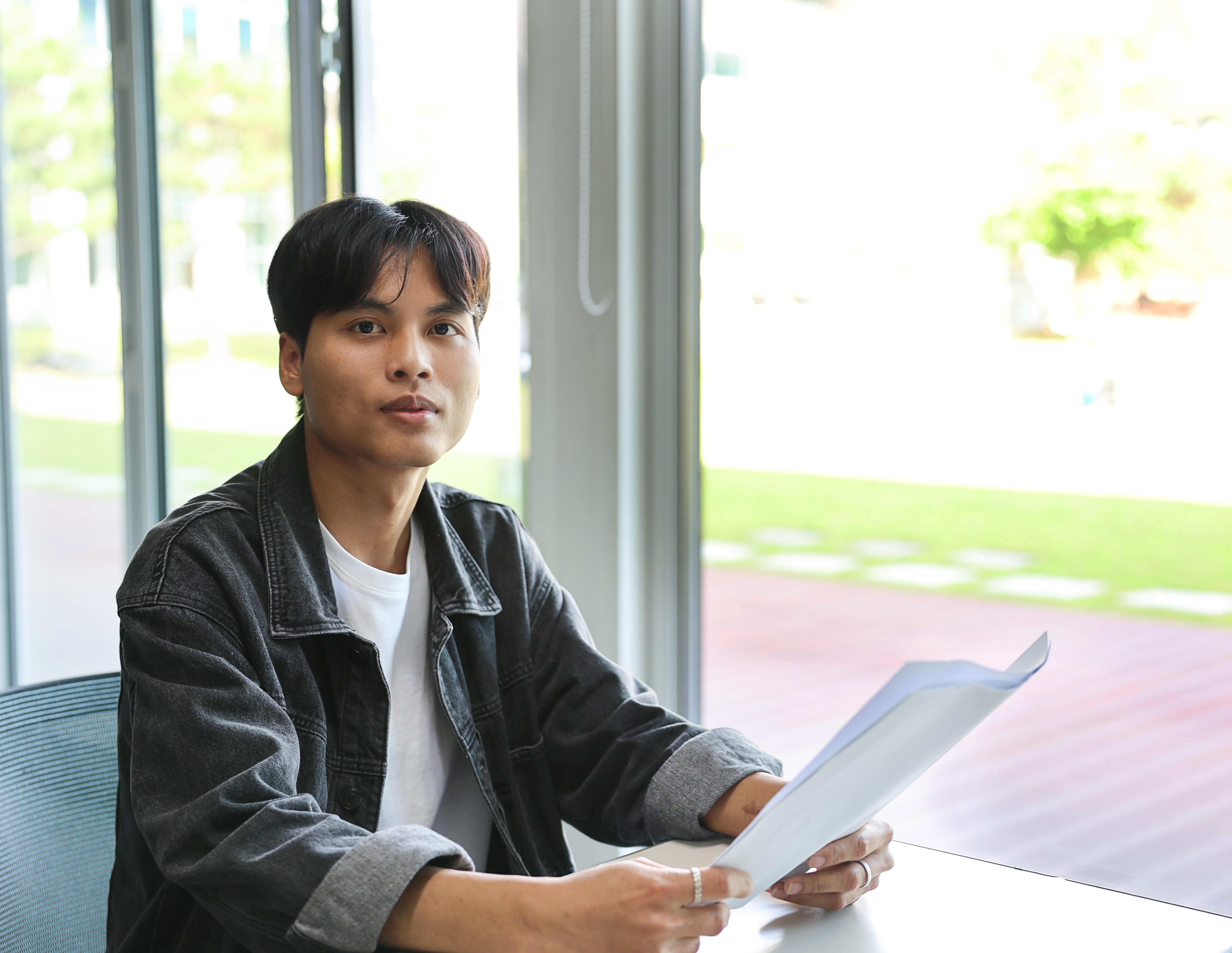
Nguyen Dien Hoang (Computer and Information Engineering‘19)
Q. When did you start preparing for employment, and how long did the process take?
A. I started preparing for employment about one year before graduation. At first, it took some time to determine my direction, but I spent around six months preparing seriously by working on my resume, improving my technical skills, and practicing for interviews.
Q. How did you search for job opportunities and apply for positions?
A. I mainly used Korean job platforms such as Saramin and JobKorea. I also actively checked recruitment information shared through international student communities and student organizations. In addition, advice from senior students helped me decide which companies to apply to and how to prepare more effectively.
Q. What was the most difficult part of the hiring process, and how did you overcome it?
A. The most difficult part was explaining technical concepts accurately in Korean. To overcome this, I organized technical vocabulary separately and practiced repeatedly. I also participated in mock interviews with Korean friends to improve my speaking skills and become more natural in conversations.
Q. Why did you choose your current company?
A. The biggest reason was the opportunity to gain diverse hands-on experience by working directly with various products such as CCTV systems and electronic displays. I also believed that gaining experience not only in development work but also in technical certification and overseas-related tasks would help me grow professionally in the long term.
Q. As an international student, what do you think was your biggest strength?
A. Being able to use both Korean and Vietnamese was a major advantage. It was especially helpful in overseas-related tasks and communication. I also believe that my experience with different cultures helped me adapt quickly to new environments.
Q. Besides Korean language skills, what competencies did you prepare for?
A. I continuously studied embedded systems, networking, and IoT technologies while gaining practical experience through projects.
Q. Which classes or experiences at Kwangwoon University were most useful for employment?
A. Courses related to networking and embedded systems, as well as my capstone design project experience, were extremely helpful in my actual work. In particular, the experience of directly integrating equipment and systems significantly improved my practical understanding.
Q. What did you focus on when writing your self-introduction and application documents?
A. Rather than simply listing experiences, I tried to focus on how I solved problems and what results I achieved. I wanted to show that I was someone capable of working effectively in real situations.
Q. How did you adapt to Korean interview styles and corporate culture?
A. I practiced mock interviews with senior students and repeatedly reviewed common interview questions. I also watched YouTube videos and studied employment-related materials to better understand Korean interview styles.
Q. Was there a question you were frequently asked during interviews?
A. I was often asked, “As a foreigner, how will you adapt to working in a Korean company?” At first, it was difficult to answer, but over time I became more comfortable answering based on my own experiences.
Q. Were there moments when being an international student became an advantage?
A. Yes. In situations involving import/export tasks or communication with overseas clients, my language ability and global perspective became strong advantages.
Q. What cultural difference in Korea surprised you the most?
A. I was impressed by how seriously people in Korea value punctuality and responsibility. At first, it required adjustment, but later it became something that helped me grow personally and professionally.
Q. What experience at Kwangwoon University do you think was most important for your employment success?
A. The experience of building an actual system through the capstone design project was the most valuable. It also received very positive feedback during interviews.
Q. Were there any university support programs that were especially helpful?
A. The resume consulting program and employment seminars provided by the university were extremely practical and helpful.
Q. How did interactions with Korean students affect your life in Korea?
A. They helped me improve not only my Korean language skills but also my understanding of workplace expressions and Korean culture, which positively influenced my job preparation process.
Q. What was the best way to make Korean friends?
A. I think actively participating in team projects was the most effective way.
Q. When did you most want to return to Vietnam, and when did you feel happiest about coming to Korea?
A. The most difficult time was when my job search took longer than expected. The happiest moment was when I finally received my job offer.
Q. What was the most challenging part of adapting to life in Korea as a Vietnamese student?
A. The hardest part was preparing both language skills and technical competencies at the same time.
Q. Do you have any personal “survival tips” for studying and living in Korea?
A. One habit that helped me a lot was organizing technical terms separately and reviewing them repeatedly every day.
Q. What advice would you give to international students preparing for employment in Korea?
A. Focus seriously on Korean language skills, especially workplace communication.
Gain practical experience related to your major through projects or internships.
Actively communicate with people around you and gather useful information.
Q. Among those three, what do you think is the single most important preparation?
A. I believe practical experience through projects is the most important because it shows what you are actually capable of doing.
Q. Is there any support system you would like universities to provide for international students?
A. I hope there will be more internship and industry-linked training opportunities specifically designed for international students.
Q. If you could say something to yourself during your job preparation period, what would it be?
A. “I could have started preparing earlier, but there’s no need to rush. Just keep going consistently.”
Q. Lastly, what are your future goals?
A. Based on my current experience, I want to further develop my expertise in the smart security and IoT industries and eventually grow into an engineer capable of leading global projects in the future.




