If you wish to get a job in korea, begin with consistent club activities!
- A design sensibility and portfolio different from koreans are the key to employment success -
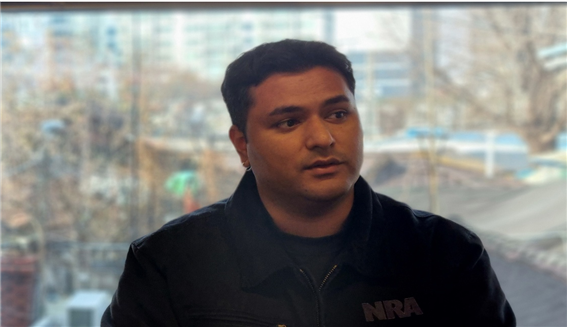
Science Shrestha (School of Media and Communication '18), Marketing Manager, SemperM Co., Ltd.
An international student who continued his studies at Kwangwoon University, ‘Science Shrestha(School of Media and Communication 18)’, successfully found employment at a Korean company and has been working for three years as a Marketing Manager at ‘SemperM Co., Ltd.’, a robotic parking system company. From the realistic barriers he faced while preparing for employment in Korea as an international student, to the strategies he used to overcome them and the advice he offers to juniors, we sat down to hear Science’s story.
Q. Please introduce your current company and role.
A. I work as a Marketing Manager at SemperM, a company specializing in robotic parking systems. This year marks my third year with the company.
Q. What motivated you to pursue employment in Korea?
A. Compared to my home country, Nepal, Korea offers a wider range of industries and career paths, as well as greater opportunities to expand one’s future career. I wanted to connect my major and experience to practical work in Korea.
Q. When did you start preparing for employment, and for how long?
A. My intensive preparation period wasn’t very long, about one month around the time of graduation. However, since I majored in Media Communication having a portfolio was essential. I had organized my portfolio well before graduation, and then focused on polishing my résumé (both English and Korean versions) as graduation approached.
Q. How did you prepare your language skills for the hiring process?
A. At the time of application, I submitted a TOPIK Level 5 certificate. The interview was conducted in a mix of Korean and English, and I think they were also assessing whether I could communicate effectively in English when necessary.
Q. How did you find job postings?
A. I mainly used LinkedIn. There were relatively many job postings open to international applicants or those that preferred English proficiency, and many postings were written in English, which made the application process easier.
Q. What was the most difficult part of the job search process?
A. The most realistic challenge was the visa issue. Many companies are hesitant about sponsoring visas for foreign employees, so finding a company willing to provide visa support was not easy. There were also many times when I submitted applications but received no response, which was quite stressful.
Q. How did your current company handle the visa issue?
A. The company provided systematic support for the process. After an initial probationary period, once certain conditions were met, they proceeded with the visa application. Since there was an agency handling the paperwork, the process was relatively smooth. (For juniors, identifying companies that can provide visa sponsorship can itself be a very important strategy.)
Q. What was the decisive factor in choosing this company?
A. The business concept of “robotic parking” really interested me. Unlike traditional parking towers, it was a new approach, and it was also connected to fields I’m interested in, such as automobiles and mobility, which made me feel I could stay engaged in the work. In addition, the marketing and branding responsibilities aligned well with my major.

Q. As an international student, what strengths set you apart from Korean applicants?
A. From the company’s perspective, I felt that they were looking for more than just ‘someone who speaks English.’ They were expecting fresh perspectives and new ideas. Being able to make suggestions from a slightly different, ‘more global point of view’ rather than following familiar approaches in the Korean market was a key strength for me.
I also organized my personal projects into a personal website, and the company mentioned that ‘it was rare to see applicants with their own website’, which left a strong impression.
Q. What helped you adapt to Korean corporate culture?
A. While I was a student, I worked part-time at the Office of International Affairs for about two years, which allowed me to experience organizational culture and communication styles in advance. Company dinner culture varies by team, but in my case, the environment was relatively free of pressure, which made adaptation easier.
Q. Were there any aspects of your time at Kwangwoon University that helped with employment?
A. I interacted more with Korean friends than with other international students. This made a difference in access to information, many Korean friends shared school-related employment and career programs with me.
In addition, participating in the photography club (KAPA) naturally expanded my network, and through part-time jobs I developed practical skills such as using honorific language and professional workplace communication.
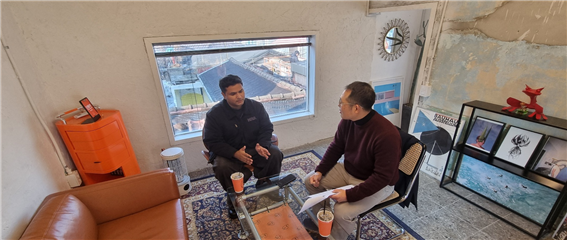
Q. If you had to choose one thing you would strongly recommend international juniors prepare, what would it be?
A. First is the quality of application documents, such as résumés and personal statements. Even if you have strong skills, it’s hard to move to the next stage if your documents are not well organized.
Second is language proficiency. These days, being good at Korean alone does not necessarily guarantee opportunities. Having solid Korean skills combined with practical English ability greatly expands your options.
I also believe that for working in Korea, it’s important not only to focus on language, but to have an attitude of understanding the cultural context, such as communication styles and organizational culture.
Q. Is there anything you would like to see improved at Kwangwoon University?
A. Even when useful employment information exists, many international students are not aware of which channels to use. It would be helpful if the university could provide clearer guidance on job platforms and channels for international students, and continue to expand specialized employment seminars for international students, such as lectures by invited experts.



